Tuesday, January 16, 2007

Scientists aim to save rare animals

Some of the planet's rarest and most unusual animals will be the focus of an ambitious conservation project launched by British scientists. The plan will focus on animals traditionally overlooked by conservationists, and will allow the public to track and donate to individual projects via a new website. This report is by Alok Jha, science correspondent of The Guardian.

Led by the Zoological Society of London (ZSL), the Edge project has identified 100 species of mammals that have the fewest relatives left alive in the wild, making them the world's most genetically-unique mammals. The 10 most endangered, including the Yanghtze river dolphin and bumblebee bat, will be the focus of the first year's work. Jonathan Baillie of ZSL said the aim was to prevent hundreds of unique species from sliding unnoticed towards extinction.


"This is the first global-scale programme specifically developed to focus on these one-of-a-kind and highly threatened animals. We will be working to protect some of the world's most extraordinary species, including giant venomous shrew-like creatures, matchbox-sized bats and egg-laying mammals, all of which are teetering on the edge of extinction."


The almost-blind Yanghtze river dolphin is at the top of the list. "It's extremely threatened, a team was recently out there looking for it and could not find one - they truly are on the verge of extinction," said Dr Baillie.


Others include the egg-laying long-beaked echidna; the mouse-like long-eared jerboa which has the largest ear to body ratio of any mammal; and the world's smallest mammal, the bumblebee bat.


"If we lose them there's nothing similar to them left on the planet," said Dr Baillie. "If you were to think of an Edge species in art terms, it would be like losing the Mona Lisa, something that's irreplaceable and completely distinct."


Ten priority animals


In selecting the Edge list scientists first highlighted those mammals with the fewest close relatives, in order to work out which animals had evolved independently for the longest period of time. The results were cross-referenced with the International Conservation Union's official list of endangered species to identify the 10 priority animals. "When species have few close relatives there could be a number of reasons - they could have evolved for a long time and not created new species or their close relatives could have died off. Either way, they represent entire lineages," said Dr Baillie.


Conserving the animals on the Edge list would be important for keeping ecosystems healthy - the more different types of species that exist in the wild the more they can adapt to changing environmental conditions, he said.


The public can track the progress of the conservation effort and contribute through the project's website. "It's appealing to the general public through the website and identifying what needs to be done to empower people," said Dr Baillie. "It's one thing to tell people that species are threatened but it's another to provide solutions and allow them to get involved in the solution."


Many of the animals on the Edge list have been overlooked because they come from poorly-explored regions or species groups where scientists have had had little interest. Dr Baillie said raising the animals' profile would be key to their future.


In collaboration with local scientists and biodiversity groups, ZSL scientists will come up with the conservation plans needed for each species on the Edge list. Their plans will be posted on the website and move ahead as money becomes available. "We'll move as fast as we can with the funding available, through the internet and other sources. People can fund projects over the internet and, as soon as they are funded, we'll move forward with them. We'll also have blogs where people can follow progress, and web forums," he said.


ZSL scientists plan to expand the project. They are working on an Edge list for amphibians, and will then move on to other groups. "There is such a gap and so many people are interested in this that it will grow quite rapidly."


Source: The Guardian 16 Januar 2007.
Copyright Guardian Unlimited


Note: The first ten selected species, out of the 100 which the Edge Project wants to preserve in the next five years,are:


Slender Loris


Shy, nocturnal primate with huge eyes endemic to Sri Lanka. Populations are declining because its forest habitat is being destroyed and the animals are also hunted for meat and body parts (particularly the eyes) used in folk medicine.


Pygmy hippopotamus


Only 2,000-3,000 individuals remain in the wild, mostly concentrated in Liberia and Sierra Leone, and conservationists say its viability is extremely poor.


Yangtze river dolphin


Also known as the baiji, this is the only living representative of an entire family, having diverged from other river dolphins more than 20m years ago. It has rapidly declined over the past 30 years, and a survey last year failed to find any surviving animals.


Attenborough's long-beaked echidna


One of the few egg-laying mammals, the species is believed to be restricted to a single peak in the Cyclops mountains in the Indonesian province of Papua.


Hispaniolan solenodon


West Indian insect-eater with the unique ability to inject venom into its prey through grooves in upper incisors. Its numbers plummeted when predators such as dogs, cats and mongooses arrived with colonists.


Bactrian camel


Probably the ancestor of all domestic two-humped camels. Fewer than 1,000 individuals survive in Gobi desert.


Hirola


Called the "four-eye antelope" because its preorbital glands look like a second set of eyes. It is the sole survivor of a once abundant group of antelopes. An estimated 600 survive.


Golden-rumped elephant shrew


The size of a small rabbit, the elephant shrew can run at speeds of up to 25km/h and is endemic to Kenya but is threatened by the destruction and fragmentation of its forest habitat.


Bumblebee bat


World's smallest mammal is endangered in Thailand where it is known from a single national park. Since it was first described in 1974 this tiny mammal has been disturbed by collectors and tourists; other threats are from burning of forest near the limestone caves in which it lives.


Long-eared jerboa


Mouse-like animal with largest ear to body ratio of any mammal. Lives in parts of China and Mongolia but little is known of ecology and no conservation measures have been set up.


Reference: peopleandplanet

Thursday, January 11, 2007

UAN Issues Reward for Information in Dog Decapitation Case

Information needed to find who left dog’s head in popcorn tin on owner’s car in Falmouth , Massachusetts
SACRAMENTO (January 11, 2007) – United Animal Nations (UAN) today offered a $1,500 reward for information leading to the arrest and conviction of whoever killed and decapitated a beloved pet dog and left his bloody, severed head in a holiday popcorn tin on the owner’s car. The dog’s owner was staying with friends at the Gosnold Grove Apartments in Falmouth when she made the gruesome discovery early on January 4.
The owner of the three-year-old pit bull named Nitrous was boarding him and her other dog, Nila, a nine-month-old female pit bull, at the Notorious B.L.U.E. Kennels in Mashpee. She later had a disagreement with the owners, which authorities believe may be connected to the death of Nitrous and the disappearance of Nila. On January 10, local authorities arrested the kennel owners after they verbally threatened Nitrous’ owner; they are still looking for more information about who killed Nitrous and searching for Nila.


“This was a blatant and senseless act of cruelty,” said UAN President and CEO Nicole Forsyth. “Local law enforcement already has some good leads in this case, so we hope our reward will encourage someone who knows more about this grisly act to come forward with information that could lead to an arrest.”

Anyone with information in this case should call Chuck Martinsenat theFalmouth Department of Natural Resources at (508) 457-2536.

UAN is offering this reward through its Zig Zag Memorial Reward Fund , designed to encourage witnesses to step forward with information about animal cruelty crimes and to advocate the need for harsher punishments in such cases. Research now shows that people who abuse animals are more likely to be violent toward humans.
“Given the connection between violence toward humans and violence toward animals, our society can no longer take animal cruelty cases lightly,” Forsyth said.

“We issue the Zig Zag Memorial Reward to encourage law enforcement agencies and prosecutors to apprehend animal abusers and punish them to the full extent of the law.”

The Zig Zag Memorial Reward is named for a Los Angeles dog who was burned, beaten and tortured for hours before dying, and whose assailants were apprehended but received scant punishment.

Now celebrating its 20th year, United Animal Nations (UAN) is North America ’s leading provider of emergency animal sheltering and disaster relief services and a key advocate for the critical needs of animals.

Wednesday, January 10, 2007

Letter to Chocolate Company Backing Chimp Haven

Dear Wayne Zink,
We see the Endangered Species chocolate bars in the store with attractive wrapper promising “10% of the net profits donated to support endangered species, habitat and humanity” and, like many other chocolate lovers, assume a portion of the money we spend will go to help the free-living animals beautifully illustrated on each candy bar. So it was with great alarm and dismay that we read in the New York Times story “No Golden Ticket, but More Than Candy” (7 Jan. 2007) that Endangered Species Chocolate has promised to donate at least $25,000 to Chimp Haven, a government-funded holding facility for chimpanzees who can be used in federal laboratories.
Enclosed is an excerpt from an article by Lee Hall, legal director for Friends of Animals. “Chimp Haven: What’s the Story?,” explains the role of Chimp Haven as a holding area for the National Institutes of Health pursuant to the CHIMP Act, signed by President Clinton in 2000. Chimp Haven, with its substantial government funding, competes with true sanctuaries that depend solely on private funding — sanctuaries far more deserving of donations, be they over $25,000 or under $25.
As a vegan organization, we at Friends of Animals appreciate that Endangered Species Chocolate offers vegan certified dark chocolate, but of course we also oppose the company’s use of dairy. Far from upholding your expressed core value of Reverence for Life, dairy means the commodification of cows who are forced to endure continual impregnation and separation from their young, half of whom are sold into the veal industry. Eventually, it’s likely that every one of these “happy” cows will wind up slaughtered for commercial gain.
Furthermore, scientists have implicated dairy as a significant contributor to global warming. Dairy cows are one of the largest sources of methane — which, according to United Nations reports, accounts for a substantial portion of relevant greenhouse gas emissions, and with about 20 times the potential warming effect of carbon dioxide.Protecting nonhuman animal communities from extinction is important work. And it’s important work because chimpanzees and other animals matter for their own reasons, not because they may be of use to researchers. Please read the enclosed document and make a commitment to support only true sanctuaries.
And please further consider how the use of land for the dairy industry is directly responsible for usurping habitat of a number of the world’s endangered species. Indeed, animal agribusiness now uses 30 percent of the earth’s entire land surface is the critical factor putting endangered species in North America at risk.
Your own product line demonstrates that the use of dairy ingredients simply isn’t necessary to produce good chocolate.
We hope you’ll consider these ways to really respect other animals’ lives, and we’d appreciate your timely response on both of these issues.
Sincerely,
Daniel Hammer,Staff Writer Friends of Animals
Contact:Wayne Zink, CEOEndangered Species Chocolate Company5846 W. 73rd St.Indianapolis, IN 46278Phone: 317-844-2886Fax: 317-844-4951 Toll Free: 1-800-293-0160 E-mail: info@chocolatebar.com
See Chimp Haven: What’s the Story?

Discovery Digital Caller ID Globe w/Clock

Wednesday, January 03, 2007

Foster parents are needed for abandoned animals

The result of less foster homes
By Deborah Wheeler

We watched the humanitarian rescue efforts that took place in New Orleans of many pets after Hurricane Katrina. In our own backyard, one local had her own rescue effort in place long before Katrina.

Vickie Gatliff has been rescuing abandoned dogs that have been picked up by Walton County Animal Control for 10 years now. The county’s animal facilities in Chipley keep animals only for seven days before euthanizing them. Gatliff makes the trip to Chipley at least once a week to pick up as many dogs as she can. She limits her rescue attempts to the ones she believes can be placed in permanent homes and to the number she can take care of until a home is found.

Currently, Gatliff only has two foster homes. Each home is currently fostering only one dog due to the number of pets already in the home. (Gatliff recently suffered a shoulder injury, also.)
“I can use some help,” said Gatliff. “A girl called today with seven boxer/Lab-mix puppies. I have no place to put seven. So, I took two and someone else took two until we can do something else.”

Gatliff said she could use help from any dog lover willing to give love and nurture to a homeless animal.

“If they only want to foster a large breed, I can get them a large breed. If they only want to take a small breed, I can get them a small breed. If they only want to foster a Pekingese, I can use them,” she said. “We provide all the food and the vet bills are taken care of. All we need is a temporary home for a dog until it is adopted out. We try to make it as easy as possible.”


Snapfish, 20 FREE prints, 12c prints


Gatliff said the only requirement is that all other pets at the foster home be spayed or neutered and if a large breed is desired, there be a back yard.

Gatliff has been in the rescue business for 10 years, beginning when she went to an animal shelter to adopt and realized there was a need.

“I was appalled by the number being euthanized,” she said.
“I go up there and walk down the aisle deciding which one dies and which one lives. I feel like a Nazi. I can only take dogs that are adoptable. Some people only want females or a small breed. And how many I take depends on how many adoptions I make,” she said.
Gatliff said Labs are very adoptable in this area, but small breed puppies are the easiest to adopt out. The second easiest is a smaller dog that is fairly young. A pure bred goes quickly, she said.

In this area, cocker spaniels are the most difficult to adopt, but eventually, homes are found for all she takes in, she said.

In December, Gatliff had 22 dogs adopted. That doesn’t count referrals she made when callers were looking for a breed she didn’t have.

“It’s about how many can we save and help,” she said.
Gatliff also accepts donations for her Adopt a Dog network at 3 Dog Framing, or by e-mail at adoptadog@myway.com.


Reference:story.waltonsun

County takes on aggressive animals

Ordinance revision lets officers pick up dogs running lose.

Jane Huh
News-Leader


Local officials have started 2007 by taking a tougher stance on aggressive animals and their owners.
The Greene County Commission met Tuesday and officially revised the county's first animal control ordinance.

The new rule prohibits dogs from running loose within the Urban Animal Control Area, a densely populated, unincorporated area that surrounds Springfield, Battlefield and most of Republic.

Dogs that are found running at large will be picked up by the Springfield-Greene County Health Department's animal control officers.

Commissioner Harold Bengsch said the new rule marked a "major, historic first step for the county." Commissioner Roseann Bentley added that she was "happy to second it," noting that all three commissioners — including Presiding Commissioner Dave Coonrod — were surprised that residents who have contacted them so far have been "appreciative" of the ordinance.

Owners who do not comply face misdemeanor charges with fines of up to $1,000 or up to six months in the Greene County Jail.

But there will be a grace period to give county residents time to adjust to the revised ordinance. Full enforcement is slated to take effect Jan. 15.

The county ordinance defines a nuisance dog as one that repeatedly displays threatening behavior by "growling, baring teeth, chasing or lunging towards an individual or individuals, bicyclists, motor vehicles, or domesticated animals or livestock or attacks domesticated animals or livestock."

It defines a vicious dog as one that, without provocation, "demonstrates a pattern of unequivocal viciousness, bites or injures a human being or exhibits a pattern of behavior of biting or attacking or attempting to bite or attack" people. A dog that "inappropriately" attacks domesticated or livestock animals off its owner's property would also be labeled as vicious.

Springfield-Greene County Health Department Director Kevin Gipson and other designated officials will also help determine whether a dog is vicious or a nuisance. Owners must pay an annual fee of $150 for a nuisance dog or $275 for a vicious dog. Owners with more than one vicious dog must pay $150 for each additional dog.

There are exceptions to the new rules.

Dogs that run loose on the owner's property, are inside a vehicle or are engaged with the owner for training, farming and hunting purposes are exempt from the rule.


Law enforcement canines and dogs that are protecting their owner in the event of a crime are also exempt.

On Jan. 22, the county commission is expected to approve $94,000 in the 2007 budget to pay for a ninth animal control officer and an additional vehicle for the department.

That sum will pay for a new animal control officer and another vehicle at the department, which now has a roster of eight officers.

The new officer is expected to begin work by the end of the month, said Jim Fry, the department's coordinator of environmental health services.

The county's inaugural animal ordinance comes about three months after Springfield's regulation on pit bull dogs was enforced.

Last April, the Springfield City Council approved a breed-specific ordinance that requires owners within the city to register their pit bulls, to keep the dog muzzled in public and to have the dog microchipped, among other conditions.

That ordinance, which is still being met with resistance from some residents, went into effect on Oct. 16.

"We receive the occasional calls on the pit bull ordinance still," Fry said. "Most are still not in favor of it."

Since mid-October, health department officials registered at least 322 pit bulls and issued 38 tickets to non- complying pit bull owners, Fry said.

"We've not had many registrations through the Christmas holiday," Fry said.

The city's pit bull owners must register their pit bulls with the city, paying an annual fee of $50 per dog, and the dog must wear a city-issued tag. Pit bulls must also be vaccinated for rabies, spayed or neutered, muzzled in public, microchipped and kept in a fenced-in enclosure if they are outside and unattended for a period of time.

Owners must also post "Pit Bull Dog" signs at the entrances of a residence.

Owners who would rather not deal with the new policy can give up their dogs to the city, which means the animal might be euthanized.

Reference:news-leader

Abused animals begin recovery

By MOLLY MONTAG and NICOLE GERRING
Times Herald


SPEAKER TWP. - Several sheep and goats haven't stopped eating since they arrived Monday afternoon at Lin and Chuck Ernest's farm.

They devoured hay tossed into their pen Tuesday afternoon and munched on their bedding when the hay was gone.


Some of the sheep were missing wool on their backs, making their bones visible beneath their bare skin.

Most of the goats are skinny, but Lin Ernest was most concerned with the littlest one. It had been lying beneath its shelter and wobbles when it walks. The bigger animals push it from the feed.
"The stronger ones will butt and smash (the littler ones)," Ernest said. "For some reason in the animal kingdom they get rid of the weak. These must have been the strongest ones."

The livestock were among about 45 malnourished animals seized Monday from a farm at 3450 E. Marlette Road in Buel Township. Deputies from the Sanilac County Sheriff Department and officials from the county's animal control office buried another 33 animals found dead on the property. The animals included a horse, a steer, pigs, rabbits, dogs, an exotic bird, iguanas, ducks, chickens and geese.

As volunteers who rescued the living animals began nursing them back to health Tuesday, police and other officials continued to assess the conditions in which they were living.

The animals' 21-year-old owner, who lives at the farm, will not be criminally charged until the police investigation is complete, the sheriff department said. The man, whose name has not been released, was arrested Monday but posted 10% of a $10,000 bond and was released from the Sanilac County Jail until he is arraigned.

Discovery Store Roboreptile


The man, who told police on Monday he had been too busy partying to feed the animals, declined a request for an interview Tuesday at his home. The Times Heraldhas filed a Freedom of Information Act request for the jail's booking records.

A 42-year-old female who lives at the farm also is expected to face charges, although she has not been arrested.

Officials said conditions at the farm were the worst they have ever seen. Some of the pigs were eating their babies and other dead animals for food. Others were outside in a muddy pasture with little shelter.

Large-scale neglect of farm animals is rare, said Randall Lockwood, a senior vice president with the American Society for the Prevention of Cruelty to Animals.

"Clearly we see this as a serious case (with), just the number of animals involved and the degree of suffering they clearly endured," he said.


Silently dying
Police said no one had complained about conditions on the farm until the anonymous tip that led to Monday's seizure.
Sanilac County Animal Control was called to the area, where distances are measured by miles rather than city blocks, for a loose horse complaint in September.

Animal Control Director Jim Matson said he responded to the complaint but the owner already had caught the horse when he arrived.

Matson saw the animal in the driveway of the East Marlette Road farm and noticed it was a little thin. But the horse was not nearly as malnourished as when it was rescued Monday.

"I told (the owner) that going into the winter older horses need a lot more food to make it through the winter," Matson said.

The horse, which volunteers call Echo, has been placed at a nearby farm. Volunteers estimate it is about 20 years old and about 200 pounds underweight.

Matson said he responds to between 100 and 150 calls each year but few are for cases of severe neglect.

"I've been doing this for 17 years. It's the worst ... by far," he said.

Stephanie Baron of the Michigan Humane Society said Monday's seizure was large, but she did not know how it compared to other cases in the state.

The Michigan Humane Society only investigates cases in Detroit, Hamtramck and Highland Park. Baron said there is no statewide agency that keeps statistics about animal cruelty.


Criminal charges
Police said it could be at least a week before prosecutors determine what criminal charges the Buel Township man and the woman living at the residence will face. Arraignment dates have not been set.
Criminal charges for animal abuse in Michigan range from a misdemeanor punishable by up to 93 days in jail for a first offense to a felony punishable by up to four years in prison.

Sanilac sheriff Lt. Jim Wagester said Sanilac County Prosecutor James V. Young will determine if the county will pursue misdemeanor or felony charges against the pair. Young could not be reached Tuesday for comment.

Although it could be considered the man's first offense, prosecutors could make the case that the animals were abused and neglected multiple times, said Randall Lockwood, a psychologist and a senior vice president with the American Society for the Prevention of Cruelty to Animals in Washington, D.C.

"This is one of the frustrating things about many cruelty laws," Lockwood said. "The animals suffer more than if they were brutally killed or maimed in an act of torture. Their suffering is very long term. Philosophically, we could argue that starvation could constitute torture."


Rebuilding
The animals, which belong to the county until the outcome of a criminal trial, have been sent to six or seven area farms, Matson said.
After a trial, a judge and prosecutor will determine where the animals should be placed, police said.

A veterinarian will assess the animals' conditions in upcoming days, Wagester said. The information will be used to help prosecutors determine what type of charges to seek.

The assessment also will determine if some of the animals are so sick they need to be euthanized, Wagester said.

Lin Ernest, who took in 10 animals, wouldn't mind keeping some of them.

"I surely have to find homes for most of them, but I'd like to keep a few," Ernest said.

The county does not currently need foster homes for the animals, Matson said, but people who want to volunteer in the future can help by signing up to care for other animals.

Reference:thetimesherald

People, animals still trapped by U.S. storms

STEVEN K. PAULSON

Associated Press

DENVER — National Guard helicopters dropped emergency food bundles and bales of hay for people and livestock trapped by snowdrifts as high as rooftops Tuesday after back-to-back blizzards paralyzed the Plains.

At least a dozen deaths were blamed on a weekend storm that knocked out electricity to tens of thousands of people in Colorado, Kansas, Nebraska and Oklahoma and left herds of cattle without food or water. The blizzard spread a blanket of snow on top of the icy layer left by a storm that hit just before Christmas.

Because of rising temperatures, many highways were clear, but many rural roads remained impassable, and National Guardsmen used Humvees and snowmobiles to reach people trapped in their homes and take them to shelters.

Colorado also launched a haylift in hopes of saving thousands of cattle immobilized by drifts as high as 10 feet. In 1997, a similar storm killed 30,000 in the state.


“Most of my cattle haven't seen food since last Thursday, when the snow started,” said Tony Hall, who has 200 head on a ranch near Lamar, Colo. “Wherever they were standing when the snow piled up, that's where they are now. Every day, it's getting more crucial.”

Colorado and Kansas were trying to find enough helicopters capable of hauling hay bales weighing up to 590 kilograms, said Don Ament, Colorado's agriculture director. Many helicopters in the state's National Guard fleet are in the Middle East.

“These cattle have already gone a number of days without food and water. They're just going to lay over dead if we don't do something soon,” Mr. Ament said.

Two Huey and three Black Hawk helicopters dropped 400 bales of hay Tuesday to feed cattle in the hardest-hit areas, Colorado officials said.

National Guard helicopters in the state also dropped Meals Ready to Eat, or military rations, just outside people's houses so they could reach the bundles, Sgt. 1st Class Steve Segin said.

In the Oklahoma Panhandle, a dozen troops went door to door in Humvees, checking on rural residents snowed in without power for days. Col. Pat Scully said the priority was to reach people on ranches and farms who might have medical problems.

“We have no reason to believe anybody is hurt, but we did think it was necessary to do some welfare checks,” said Michelann Ooten, spokeswoman for the Oklahoma Department of Emergency Management.


Members of the Kansas National Guard and the Highway Patrol helped the Haskell County Sheriff's Department also went door to door.

At least 25 emergency shelters had been set up in western Kansas, said Sharon Watson, spokeswoman for Kansas Emergency Management.

Ice in some areas was even more difficult to deal with than the snow, snapping trees and bringing down power lines. In Nebraska, big portable generators were set up to maintain water service and keep emergency shelters open.

In an aerial tour, Nebraska Gov. Dave Heineman said Tuesday that he saw damage “more massive and more extensive than any of us imagined,” noting that in some areas ice was 7 centimetres thick on trees. Gov. Heineman had declared a state of emergency in advance of the storm.

About 22,000 homes and businesses in western Kansas were without power, along with at least 29,000 customers in Nebraska and more than 6,000 in Colorado and Oklahoma. Some utility officials warned it could take weeks to restore electricity.

Every motel in the western Nebraska town of Kearney was full of people who had no electricity.

Patrick Keough, 49, was one of 10 people in his family sharing three rooms at the Kearney Ramada Inn. At his home east of Kearney, there was no power at his house or shop, where he makes fibreglass animals for advertising.

“Hardly anybody got any snow,” Mr. Keough said Tuesday. “It's all just ice. Even the gravel roads are a sheet of ice, because the gravel is below the level of the ice. I've never seen that in my life.”

Power poles are snapped off for miles around, he said, and he was told not to expect any power for at least three weeks.

Ten traffic deaths were blamed on the latest storm in Colorado, Texas and Minnesota. A tornado spun off by the same weather system killed one person in Texas, and a Kansas sheriff's deputy died in his home after falling down the stairs while tending to a generator.

Reference:theglobeandmail

Five Accidents Involve Animals

Five of six accidents reported this week by the Marshall County Sheriff's Office involved collisions with animals.
Four of the accidents were collisions with deer, while another vehicle hit a cow.
Friday Antionette Lynn LaCroix of Veblen was traveling south on 444th Avenue a quarter mile south of SD Highway 25 when she hit a cow on the road owned by Louis John Vrchota. Damages were set at $1,000 to the LaCroix vehicle, and the cow was valued at $600.


Last week Wednesday Rachel Dorthea Cameron of Pierpont missed the turn at the intersection of Third Avenue and the Anderson Trailer Court in Britton. When backing up she hit a parked vehicle owned by Catherine Gayle Brandsma. Damages were set at $2,000 to the Cameron vehicle and $2,500 to the Brandsma vehicle.
Shannon Marie Wegleitner of Lake City was driving south on SD #27 on Dec. 21 when she hit a deer about .3 of a mile south of 112th Street. Damages to the vehicle were set at $2,500.
On Dec. 19 Todd Marty Monsen of Veblen was driving east on MC #6 at the SD #27 intersection when five deer came out of the ditch. He hit two of the animals, resulting in $2,185 damage to his vehicle.
Mary Ann Eye of Britton hit a deer on Dec. 16 one mile west of the Amherst road on SD #10. Damages were pegged at $2,700.
In an accident that occurred Nov. 21, Nellie Hatfield of Hecla was traveling west on SD #10 about 10 miles west of SD #27 when a deer came out of the south ditch. The collision resulted in $2,138 of damage to the Hatfield vehicle.

Reference:zwire

Thursday, December 28, 2006

Polar Bears Proposed for U.S. Endangered Species List


The U.S. government today proposed listing polar bears as threatened with extinction under the Endangered Species Act because the animals' sea ice habitat is melting.

"Polar bears are one of nature's ultimate survivors," Department of the Interior Secretary Dirk Kempthorne told reporters today at a press conference.

"They are able to live and thrive in one of the world's harshest environments. But there's concern that their habitat may literally be melting."

The Endangered Species Act requires federal agencies to ensure that all activities the government approves will not harm listed species or their habitats.

Environmental groups quickly connected the announcement with scientific evidence that climate change is melting the iconic bear's Arctic habitat, causing the animals to go hungry and give birth less often.

"This is a watershed decision," said Kassie Siegel, an attorney for the Center for Biological Diversity in Joshua Tree, California. "Even the Bush Administration can no longer deny the science of global warming."

The center was one of three organizations that filed suit against the administration to protect the bear from the impacts of global warming in the Arctic.

Today's announcement meets a deadline under a settlement with the environmental groups to consider adding the bears to the endangered species list.

The proposed listing was published today in the Federal Register. Public comments will be accepted for 90 days, and a final listing decision is expected within a year.

Regulating Emissions?

A formal listing of polar bears as a threatened species would raise the possibility that the U.S. government will force curbs on greenhouse gas emissions, Siegel says.

Polar bears live only in the Arctic, the northernmost region of Earth. The bears swim between ice floes to hunt their primary prey, the ringed seal. They also travel, mate, and sometimes give birth on the ice. Scientists estimate that between 20,000 and 25,000 polar bears live in 19 distinct populations scattered throughout the Arctic.

About 4,700 live in Alaska and spend part of the year in Canada and Russia. Other bear populations are found in Greenland and Norway.


Six Flags Theme Parks - Buy Tickets Online Now!


The most studied population resides in western Canada's Hudson Bay. The population there has declined 22 percent due to weight loss and low cub survival stemming from sea ice loss since 1987.

While the Alaska population has not experienced such a steep decline, biologists are concerned that the bears' numbers may drop in the future, as the population faces similar challenges.

Scientists have linked emissions of carbon dioxide and other greenhouse gases to warmer temperatures that are rapidly melting glaciers and polar ice caps.

Earlier this month, for instance, a study based on computer models predicted the Arctic could have a completely ice-free summer by 2040, decades earlier than previously expected.

Scientists say reduced greenhouse gas emissions could slow and maybe even reverse the Arctic ice retreat, allowing polar bears to recover.

The U.S. Fish and Wildlife Service (FWS), the agency responsible for the Endangered Species Act, has ruled out oil and gas development and subsistence hunting as factors in the polar bear decline.

"This is directly tied to the sea ice loss and the ultimate dependence of the polar bear on drift ice," Dale Hall, the FWS director, said in today's teleconference.

But Interior Secretary Kempthorne said his department's scientists lack the authority to address the causes of the receding sea ice and therefore stopped short of blaming ice loss on global warming.

Causation, he said, is beyond the scope of the department's responsibility under the endangered species law.

"However, climate change science initiatives of causation are discussed in other analyses undertaken by the [Bush] Administration," he said. "The administration treats climate change very seriously and recognizes the role of greenhouse gases in climate change."

According to Siegel, of the Center for Biological Diversity, a formal listing could affect the federal approval process for facilities such as industrial coal-fired power plants and lead to stricter fuel economy standards for automobiles.

"Federal agencies will have to ensure that their greenhouse gas emissions do not adversely modify the critical habitat of polar bears or the continued existence of polar bears," she said.

References: National Geographic by John Roach

Wednesday, December 06, 2006

Rockaway animal rescue group scammed


Eleventh Hour Rescue gets fake
$10,000 check; scrambles to pay $7,000

BY MATT MANOCHIO DAILY RECORD
A local pet-rescue network thought it got a Christmas miracle in the mail in the form of a $10,000 check, but all it got was scammed and now the organization is scrambling to pay a $7,000 bill.

Mary Parente, a volunteer with Eleventh Hour Rescue, a nonprofit animal rescue organization based in Rockaway, on Tuesday said her organization was contacted via e-mailby a man named Benjamin Godsonn, who wrote that he wanted to donate some money.
She received a check via FedEx from Godsonn for $10,000 on Thursday, and the group was ecstatic.

"We were literally crying,"Parente said. "We ran to the bank and deposited it."
Parente said the money would enable the foster network to pay off some outstanding veterinarian bills, and save more dogs and cats from being put to sleep. She said the group committed to rescuing and treating 11 dogs, all because of the donation.

"We even named one after this guy because we thought he was our savior," she said.
Some warning flags soon began popping up, however.
She said Eleventh Hour noticed the name on the check, which was certified by Sterling Bank in Houston, had a name different from Godsonn's on it. Despite that, the group still felt it was legitimate because the check was watermarked and looked real.

"It was as legitimate as it could come," she said, later adding, "Apparently that's what their thing is. The check is so real-looking. It's so official."
Red flag
Then, a few days later, Parente received an e-mail from Godsonn saying that his secretary meant to only issue a check for $4,500 and not $6,500. He asked her to wire money to an address in Illinois.

"He wanted $2,000 (wired) via Western Union -- there's no way to track it," she said. "That's when a red flag came up with us. We were like, wait a minute, what is he talking about? He sent $10,000 and referred to $6,500."

Parente's local branch officer said none of this sounded right. She went so far as to call the Houston bank that allegedly issued the check.
"She knew what I was talking about," Parente said of the banker in Texas. Parente was informed by the Houston bank "that's a complete scam" and it happens "all over the country every day."

Parente got an e-mail from Sterling Bank in Houston confirming the fraud and Eleventh Hour never sent the money.

"The best thing that a merchant can do if someone presents a Sterling Bank check is call us," said Graham Painter, executive vice president of corporate communication for Sterling. He said the number is (713) 466-8300.

Painter declined to say what sets a good check apart from a bad one because banks don't want to let the crooks know what they're looking for.
"The big picture is scanners have gotten very sophisticated," he said. "(Cons) buy a cashier's check, scan it and alter it, and print it on high-quality paper.
"Instead of $50 (it's altered) to $5,000," he gave as an example. He said con men print many of these checks and end up selling them.

Parente said Eleventh Hour will contact Rockaway Borough police to report the fraud, and that another volunteer is reaching out to the FBI.
Appealing for help
Parente said Eleventh Hour, thinking it had $10,000 prior to the unseemly revelations, spent about $7,000 on spaying and neutering 11 dogs, and making sure all had the proper shots.
She said she is appealing to the public for help, and also trying to warn them.
"We want to make sure that other nonprofits are aware of this situation," she said. "According to bank officers this is a rampant scam. ... Not only are we appealing to the public for help at this time, we don't want any nonprofits or elderly people (scammed)."


Heated beds at Petstreetmall.com. Lowest Prices!


Benny hangs out with Mary Parente and Linda Schiller, volunteers with Eleventh Hour Rescue, a nonprofit animal rescue organization based in Rockaway that was recently scammed. KAREN MANCINELLI / DAILY RECORD


Benny is one of 11 dogs saved by Eleventh Hour Rescue as a result of a large donation that turned out to be a scam. Eleventh Hour Rescue has more than 50 dogs, including puppies, available for adoption. Their Web site is www.ehrdogs.org.

How to help
Eleventh Hour Rescuec/o 19 Elycroft Ave.Rockaway, N.J. 07866(973) 607-4126 or e-mail mary@ehrdogs.org

References:dailyrecord

Tuesday, November 28, 2006

Sea Lion Attacks Raise Flags


A series of sea-lion attacks on people near San Francisco's Fisherman's Warf in recent months has led experts to warn that the animals are not as cute and cuddly as they appear.

"People should understand these animals are out there not to attack people or humans. But they're out there to survive for themselves," said Jim Oswald, a spokesman for the Marine Mammal Center across the Golden Gate Bridge from San Francisco.


Discovery Store Roboreptile


In the most frightening of the recent episodes, a rogue sea lion bit 14 swimmers this month and chased 10 more out of the water at San Francisco's Aquatic Park, a sheltered lagoon near the bay. At least one victim suffered puncture wounds.

Some scientists speculate that the animals' aggressive behavior is being caused by eating fish contaminated by toxic algae, or by a shortage of food off the coast. But wildlife experts say even healthy sea lions are best left alone.

In Southern California in June, a sea lion charged several people on Manhattan Beach and bit a man before waddling into the water and swimming away. In Berkeley, a woman was hospitalized last spring after a sea lion took a chunk out of her leg.

Last year, a group of sea lions took over a Newport Beach marina and caused a vintage 50-foot yacht to capsize when they boarded it. And a lifeguard in Santa Barbara was bitten three times while swimming off El Capitan State Beach.

In Alaska, a huge sea lion jumped onto a fisherman's boat in 2004, knocked him overboard and pulled him underwater; he escaped without serious injury.

Sea lions, which can reach 1,000 pounds, typically bite only if they feel threatened or cornered. And they are more likely to flee than fight if they can escape. Researchers have described the most recent attacks, in which some swimmers were chased through open water, as abnormal behavior.

Still, with a population numbering about 200,000 and growing, these playful, social creatures are increasingly likely to cross paths with humans.

Sea lions accustomed to the easy pickings of seafood scraps in popular fishing areas can become aggressive toward people if they fear their food is about to be taken away, Oswald said.


The Berkeley attack, for example, was at a marina where fishermen dock their boats and feed fish scraps to sea lions. After they ran out of scraps, the sea lion turned aggressive and bit a crew member.

At the same time, a food shortage off the Southern California coast could be driving more hungry sea lions than usual to San Francisco Bay, said Lynn Cullivan, a spokesman for San Francisco Maritime National Historical Park.

Humans could also be contributing to aggression in sea lions in another way: Toxic algae blooms fed by agricultural runoff and other pollution can lead to the poisoning of marine mammals by a chemical called domoic acid, which can cause brain damage. The Marine Mammal Center treated more than 200 sea lions for domoic acid poisoning last year.


Veterinarians at the center believe the brain damage caused by the poison could have led to the marauding animal's erratic behavior in Aquatic Park, Oswald said, though they cannot be sure without actually examining the sea lion.

So far park rangers have not been able to track the attacker down. Nevertheless, the lagoon where the attacks occurred has been reopened to swimmers, though with new signs warning people to stay away from sea lions.

"People who swim with the lions — though I'm sure that's nice — it's probably not the best thing to do," Oswald said. "It's a wild animal. And you want to keep them wild."


References:Discovery.com

Monday, November 06, 2006

Fire Hits Orlando's Gatorland

ORLANDO, Fla. — A fire early Monday destroyed a section of Gatorland, one of Florida's oldest tourist attractions, and killed as many as three pythons and crocodiles.

The blaze badly damaged the gift shop, entrance and some administrative offices. The giant concrete gator head that serves as the main entrance was charred, its white teeth blackened with soot, its mouth full of debris.

Two 8-foot-long pythons kept in a holding pen near the gift shop died in the blaze, as did a 5-foot crocodile, said Gatorland spokeswoman Michelle Harris. Another 5-foot crocodile managed to survive by dipping into a pond, she said.

The 110-acre park opened in 1949 and attracts about 400,000 tourists each year. It features people wrestling gators, a"jumparoo"show where the big reptiles leap for food, and up-close encounters where guests can hold snakes, scorpions, spiders and birds.

In all, Gatorland has a few thousand animals, said Tim Williams, the park's director of media production.

Turn a Child's love of Animals into a love of Reading!


The cause of the fire was under investigation.

Officials will try to reopen the park as soon as possible, but it was unclear how quick that might be, Harris said. The gator mouth entrance may be salvageable.

"This park is like an old alligator. Gators fight, they get scarred up, they get beat up, they tear each other up, but they're resilient,"Williams said."This park's been here for 57 years. We're not going anywhere."

Site Link:Gatorland


Reference:foxnews

Man Gets 6 Months for Animal Cruelty

By THE ASSOCIATED PRESS
Published: November 6, 2006


SALT LAKE CITY (AP) -- A man who pleaded guilty to putting his wife's puppy in a 200-degree oven, crippling it, was sentenced Monday to six months in jail.

Third District Judge William Barrett ordered Marc Christopher Vincent, 36, to serve six months in jail without the chance of early release. He must also pay a $500 fine and $986 in veterinary bills for the dog.

Vincent, 36, pleaded guilty Sept. 18 to one count of misdemeanor aggravated animal cruelty for putting the dog in an oven for five minutes on May 25 during a fight with his wife, Rhonda, who has since filed for divorce. The black Chihuahua mix named Henry suffered permanent damage to its front paws and now limps.

As part of the plea agreement, a second charge of animal cruelty was dropped. Prosecutors had accused Vincent of turning a leaf blower on the dog in a separate incident, damaging the dog's eye so badly it had to be removed.


Discovery Channel Store Exclusive Roboreptile


Vincent was ordered to serve two years' probation after his jail sentence, seek anger management therapy, have no contact with his wife or any animals, and get a mental health evaluation.

Salt Lake County prosecutor Elizabeth Henry said Utah is one of nine states that has only misdemeanor punishment for animal cruelty.

References:nytimes

Friday, November 03, 2006

Elephants Recognize Themselves in Mirror


Looking Good
An elephant checks out its reflection. In a study, researchers introduced three adult female Asian elephants to a large mirror placed in their exhibit at the Bronx Zoo in New York City. The animals showed signs of self recognition, such as inspecting their mouths and ears and, in one case, touching a mark on its head.

When presented with a jumbo-sized mirror, elephants recognized their reflections and even took the opportunity to investigate the inside of their mouths and ears, according to a paper published in the current Proceedings of the National Academy of Sciences.


Such self-awareness is rare. Scientists previously believed only humans, apes and dolphins possessed self-recognition skills.


All of these animals are highly intelligent and seem to feel empathy, a quality that likely is linked to self-awareness.


"What they have in common is complex sociality that includes high levels of cooperation, altruism and large brains," coauthor Frans de Waal told Discovery News. De Waal is a psychology professor at Emory University in Atlanta and director of Living Links at the university's Yerkes Primate Center.


He added, "In literature about human children, there is speculation as to how increased self-awareness makes it possible to set the self apart from others, which in turn permits the self to take the other’s perspective — a prerequisite for complex forms of empathy."


For the study, de Waal and colleagues Diana Reiss and Joshua Plotnik introduced three adult female Asian elephants — Happy, Patty and Maxine — to a large mirror placed in their exhibit at the Bronx Zoo in New York City.


According to the paper, animals typically have a social response toward the reflection they see in the mirror. They then try to inspect the mirror, for instance by looking behind it. Most animals, such as parrots, dogs and cats, show these behaviors.


The three elephants, however, had different reactions to their reflections. Each elephant played a sort of peek-a-boo by swaying their heads, trunks and bodies in and out of mirror view. They even brought food in front of the mirror and watched themselves eat.

investigating the inside of her oral cavity. She also used her trunk to pull her ear slowly forward toward the mirror.


The researchers next painted two "X" marks on the foreheads of the elephants. One mark was invisible to control for odor and tactile cues, while the other was fully visible. This "mark test" is the scientific standard for determining whether an animal recognizes itself in a mirror.

As soon as Happy saw the visible mark, she touched it with her trunk in front of the mirror. She did this 47 times. Maxine and Patty, however, ignored the marks on their foreheads.


"We believe that because elephants love to dust bathe and throw food and dirt on their backs for storage, such a relatively small mark on their head might not bother them," Plotnik told Discovery News. "Chimpanzees and humans groom themselves by picking things off their bodies, while elephants love to be covered in dirt and mud."


Lori Marino, a senior lecturer in neuroscience and behavioral biology at Emory, worked on the earlier dolphin/mirror study. She told Discovery News she was not surprised that elephants have mirror self-recognition abilities.


"Like dolphins, great apes and humans, elephant brains are large and highly convoluted and their social lives are extraordinarily complex," Marino said.


She added that many other animals possess self-awareness, a multi-faceted, complex phenomenon, which seems to manifest itself at different levels.


Since elephant self-awareness and empathy are on a similar level to that of humans, Plotnik hopes the findings will strengthen our commitment toward conservation, especially as the wild elephant population continues to plummet due to habitat loss and poaching.

Reference:discovery

Florida Landscaper Attacked By Kangaroo

(NBC News) - A south Florida landscaper claims he was attacked by a client's pet kangaroo.

Adam Rushetsky was working in the yard of a home when he says the homeowner's kangaroo ambushed him.

He has scars on his back from where the kangaroo allegedly bit and scratched him.

The pet's owner believes Rushetsky is over exaggerating the incident.

He says the animal is actually a Wallaby and only stands at three feet tall.

Rushetsky plans on taking legal action.


"As I went to pull his arms off of me, he then went ahead and bit me, making coughing noise at the same time," said Rushetsky.

"The kangaroo kind of sprung off his tail and stood up like, kind of with his hands up like six, seven feet."

Reference:ksdk

Humane Society Takes Ownership Of Horses Involved In I-44 Crash

By Erin O'Neill

(KSDK) - The Humane Society of Missouri has been awarded custody of more than two dozen horses injured in a crash on Interstate 44 last month. The horses, which were on their way to a Chicago slaughter house, will soon be available for adoption.

Twenty-five horses and a mule survived the crash. Now that the Humane Society of Missouri has ownership, they have been saved from slaughter a second time.

"It was one of the worst things I've seen, and I've seen a lot of things, so you know it really doesn't get any worse than that," said Tim Rickey, assistant director of rescues and investigations for the Humane Society of Missouri

It was early in the morning on September 27 that a trailer carrying 42 horses flipped over on Interstate 44 just north of Sullivan in Franklin County. A veterinarian who responded to the scene said there were horses everywhere, some trapped on top of others. Rescuing the horses took hours.

In the end, 16 had died, and nine had to be euthanized; 25 horses survived. Most continue to recover at the Humane Society's Longmeadow Rescue Ranch in Union, Mo.

The Humane Society of Missouri received ownership of the animals by agreeing not to seek recovery costs associated with the rescue, treatment and care of the animals. So far, those costs exceed $84,000.

"The community has been very generous in this area, but you know the costs continue to mount up, and we would encourage anybody that wants to make a financial donation for these horses," said Rickey.

If you would like to make a donation to the "Horse Heroes Sponsorship Program," you can call 314-951-1542.

FREE Elephants Zoobook!  FREE Tiger Poster!


You can also see photos of the animals and an update on their condition on the Humane Society website by visiting the link to the right of this story.

The mule that survived returned to a veterinary hospital for further treatment of leg wounds.

One of the surviving horses, a 13-year-old quarter horse-type mare that rescuers named Darlin, had to be euthanized because of hoof and spine injures that became progressively worse.


Reference:ksdk

Letter Carrier Attacked By Squirrel Is Taken To Hospital

OIL CITY, Pa. (AP) -- Letter carriers occasionally have to deal with angry dogs or maybe even a spider's nest in a mailbox, but a mean squirrel?

Barb Dougherty, a 30-year Postal Service employee, said she was attacked and bitten Monday by a squirrel while delivering mail in Oil City, about 75 miles north of Pittsburgh.


Dog Bone Ice Cube Trays

"It was a freak thing. It was traumatic," Dougherty told The Derrick newspaper. "I saw it there on the porch, put the mail in the box and turned to walk away and it jumped on me."

She said the animal ran up her leg and onto her back.

"I eventually got a hold of the tail and pulled it off me," Dougherty said. "No one was home at the house where I was delivering the mail, but the neighbor lady heard me screaming and came over."

An ambulance took Dougherty to a hospital, where she was treated for cuts and scratches. The squirrel was killed with a BB gun and sent to a lab to be tested for rabies. Dougherty was given the first series of rabies shots as a precaution.

Postal officials said the attack is extraordinary.

"In about 230 years of postal history, I bet it is not the first, but I've personally never heard of another squirrel biting," said Steve Kochersperger, spokesman for the Erie district.


Reference:ksdk

Wednesday, October 25, 2006

Secrets of the honey bee revealed in genome code


LONDON (Reuters) - Scientists have unraveled the genetic code of the honey bee, uncovering clues about its complex social behavior, heightened sense of smell and African origins.

It is the third insect to have its genome mapped and joins the fruit fly and mosquito in the exclusive club.

The honey bee, or Apis mellifera, evolved more slowly than the other insects but has more genes related to smell.

"In biology and biomedicine, honey bees are used to study many diverse areas, including allergic disease, development, gerontology, neuroscience, social behavior and venom toxicology," said Gene Robinson, director of the University of Illinois Bee Research Facility and one of the leaders of the project.

"The honey bee genome project is ushering in a bright era of bee research for the benefit of agriculture, biological research and human health," he added.

With its highly evolved social structure of tens of thousands of worker bees commanded by Queen Elizabeth, the honey bee genome could also improve the search for genes linked to social behavior.


FREE Elephants Zoobook!  FREE Tiger Poster!


But the consortium of scientists, who reported the findings in the journal Nature, said a comprehensive analysis of the honey bee and other species will be needed to understand its social life.

Queen Elizabeth has 10 times the lifespan of workers and lays up to 2,000 eggs a day. Despite having tiny brains, honey bees display honed cognitive abilities and learn to associate a flower's color, shape and scent with food, which increases its foraging ability.

The scientists who analyzed the genetic code have discovered the honey bee originated in Africa and spread to Europe in two ancient migrations.

"The African bees' spread throughout the New World is a spectacular example of biological invasion," the scientists said in the Nature report.

The number of genes in honey bees related to smell outnumber those linked to taste. The insects also have fewer genes than the fruitfly or mosquito for immunity.

Honey bees use pheromones, substances secreted by glands, to distinguish the gender, caste and age of other bees, according to the scientists.

"This DNA sequence is a major step toward answering a basic question of social evolution: at the genomic level, what does it take to engineer an advanced colonial insect?" said Edward Wilson, of Harvard University in a commentary on the research.

Reference:reuters

Burning of kittens investigated


An investigation into an incident in which four kittens were found burned to death in County Londonderry is continuing, police have said.

The remains of three of the kittens were found after a grass fire at a house in Freehall Road in Castlerock last Friday. A fourth was found nearby.

It is understood a fifth was rescued, and although badly injured, rehomed.

Police have appealed for anyone with information about the incident to contact them at Coleraine station.

A spokeswoman for Oak Tree Animal Rescue Centre told the Coleraine Times newspaper that the incident was "an appalling act of cruelty".

"A neighbour, who reported the incident to us, actually heard the animals screaming and managed to rescue one of the kittens.

"She was unable to go back to try and rescue more of the kittens because of the intensity of the blaze," she said.


Animal Den - Gift Shop for Cat Lovers!

The spokeswoman said the penalties for animal cruelty were too lenient in Northern Ireland.

"In America you can get up to seven years in prison for causing cruelty to animals," she said.

"We see a lot of cruelty to animals, but these were helpless little kittens that couldn't escape. It is senseless."


Reference:
bbc

Canadian polar bear may be West Nile victim

TORONTO (Reuters) - A polar bear at the Toronto zoo could be the first of its kind to die of the mosquito-borne West Nile virus, and zoo officials say the thick-skinned animal could have been bitten on the nose.

"It is bizarre because (polar bears) have very thick fur and thick skin, so a mosquito would have had to land on his nose or his eyeball or somewhere where it could get through," Shanna Young, executive director of communications at Toronto Zoo, said on Wednesday.

She said the zoo believed it was the first time that a polar bear had died of the tropical disease, although there has been evidence that the virus has turned up in black bears.

The zoo euthanized the bear, named Kunik, last month after it had trouble using its hind legs. The symptoms pointed to West Nile encephalitis, an inflammation of the brain, and Young said postmortem tests came up strongly positive.

A sample of the bear's brain tissue has been sent to Health Canada, which is responsible for national public health, and a confirmation of the cause of death is expected within weeks.


Meade ETX-80-BB Telescope -- Free Shipping!


West Nile virus was first isolated nearly 70 years ago in Uganda. It is mainly transmitted through the bite of an infected mosquito, which itself became infected by feeding on the blood of infected birds.

Toronto has seen only six human cases of West Nile this year, down from 38 in 2005. The zoo, Canada's biggest, conducts mosquito eradication programs and tests vaccinations on its animals, but there is no vaccine for polar bears, Young said.

Kunik was 26 years old and came to the zoo after it was orphaned in Canada's Northwest Territories, Young said. "He was huge, over a thousand pounds. He loved to swim and was very playful."

Only one polar bear remains at the zoo. Another died earlier this year of old age.

Reference:reuters

Crabs Change Color to Avoid Hungry Birds

By Stephen Pincock, ABC Science Online


Tiny blue-shelled fiddler crabs change their color to avoid being eaten by predatory birds, researchers have discovered.

Scientists have long been intrigued by the crabs' ability to change the color of their top shell from bright blue to a more subdued, muddy shade.


AP Photo/Australian National University


Brighter Color, Less to Fear
Certain species of fiddler crab, as seen in this undated handout photo, can alter their coloring from bright to dull if they sense predators are near, finds new research from Australian National University.


But exactly why the crabs change their color hasn't been clear.


"When you catch them, for instance, they go dull," said Jochen Zeil of the Australian National University in Canberra. Zeil's research appears in the Journal of Experimental Biology.

To find an answer, Zeil and his colleagues studied a particular species of fiddler crab, Uca vomeris, on the mud flats of Australia's northeast coast, south of Townsville.

"Some populations of these crabs are all very dull, but in other places they are very colorful," Zeil said. "We wanted to understand how this happens."

The scientists looked at variations between crabs from three different areas: one group was dull colored, another was colorful and a third group mixed.

They found differences in the numbers of crab-eating birds near the dull colored populations.

"In the places where the crabs were colorful, there were few birds," Zeil says. "But in the others there were more birds actively hunting crabs."


To confirm these findings, the scientists set up an experimental model to test whether the crabs changed their shell color in direct response to the threat of being eaten.

They found two very colorful crabs living close together and set up a kind of wooden screen between them.

One crab was left to go about its life as normal. But the other was subjected every couple of minutes to the attentions of a pretend bird. In reality, it was a small foam ball suspended on fishing wire.

Crabs have poor vision, so the approach of the black ball was enough to convince it a bird was coming, Zeil explained.

Within days, that crab had changed its color to the muddy shade, while the other remained colorful.

"We could observe that over a couple of days, the crabs did change their color when they are confronted with this dummy bird," the researcher said.

Scientists suspect the blue color of the crabs is normally used to help them identify others living close by, and avoid fights, Zeil said.

The next step in his research will be to see whether staying dull all the time has any effect on neighborly relations.

Reference:discovery

Copy-cat cloning firm goes out of business

WASHINGTON (Reuters) - A California company set up to clone beloved pets has gone out of business after cloning just two cats.

A spokesman for Genetic Savings & Clone on Thursday said the Sausalito, California-based company had closed and its tissue bank was being sold to livestock cloning firm ViaGen Inc., based in Austin, Texas.

The company had cloned just two cats, in 2004, but offered to do more at prices of up to $50,000.

The Humane Society of the United States, which campaigned against the business from the start, celebrated the news.

"It's no surprise the demand for cloned pets is basically nonexistent, and we're very pleased that Genetic Savings & Clone's attempt to run a cloning pet store was a spectacular flop," Wayne Pacelle, Humane Society president, said in a statement.


10% Off Entire Order at PetCareRx


"Rather than spending millions of dollars on developing a technology with no redeeming social purpose, those resources could be aimed at reducing pet overpopulation, including pet adoption outreach efforts and spay/neuter education," Pacelle said.

Calls to Genetic Savings & Clone's CEO, Lou Hawthorne, were not answered and the company's office line was disconnected.

In 2005, California lawmakers rejected a proposal aimed at the company that would have banned sales of cloned pets.

Reference:reuters

Family may sue vet after dog's death from shot

Death shocks family
By ROBERT MARCHANT


Mack, a proud and frisky little English bulldog, went for a trip to the vet's office recently.
But a routine visit for a vaccination turned deadly, leaving an Ossining family angry, upset and ready to sue.
"My husband left with the dog, and he came back with the collar, that's all. How do you explain that?" asked Theresa Marino, who recently gave birth to a daughter, Joie.
"He was our dog, not even a year old, like a baby. I wanted him to grow up with my daughter. He was great with her," said Marino, who works in sales and has a stepdaughter with her husband, Joseph.
Mack was taken for a vaccination against rabies, Lyme disease and bordetella (kennel cough) at the Yorktown Animal Hospital on Sept. 30. Joseph Marino said he was wary and watchful about the procedure since another bulldog of his had died after receiving a vaccination 10 years ago.
After the dog was vaccinated, he suffered an allergic reaction, known technically as anaphylactic shock. His airways were constricted, and he suffocated.
Joseph Marino, a union steward, said he couldn't eat or sleep over the weekend after his dog died. "Every time I think about it, I feel like crying," he said, and the case is likely to end up in small claims court in Yorktown. The Marino family wants the hospital to pay for the $3,900 it cost them to purchase the purebred bulldog from a breeder.
Joseph Marino said he was upset at the handling of the matter at the animal hospital. He questioned why the dog was not weighed before he was given an injection in order to determine the dosage, and he said he pointed out a large lump on Mack's hip that should have raised an alert that trouble was coming in the form of an allergic reaction.


First 20 Prints Free from Snapfish


Dr. Phillip Raclyn of the Yorktown Animal Hospital said the hospital had done everything it could for Mack, that all the proper procedures were followed and his staff was not at fault. He noted that the same dose is given to every animal, regardless of a dog's size or weight, and added that a lump under the skin after an injection is not uncommon or unusual.
"Any dog, any cat, any human can suffer an anaphylactic reaction, and you can get a reaction in many ways," he said. "He (Marino) lost his dog, and we feel terrible about it. He wants to blame us, but we're not to blame. He doesn't want to accept that bad things happen. Bad things can happen to good dogs."
Raclyn continued, "We recognized the anaphylactic shock and did all the necessary steps you need to do." He urged people to vaccinate their dogs, since New York state has the second-highest rate of rabies in the U.S., after Texas.
An expert on bulldogs, Lita Eitner-England, notes they pose a number of medical challenges, along with many virtues.
"They have a noble, regal appearance, they're pretty good with kids, they're quiet and they don't need a tremendous amount of exercise. They have so much character and personality," she said, "But there are a lot of health issues: eye problems, elongated soft palates, allergies. The list goes on and on. There can be a lot of vet bills."
They are also an expensive dog, she said, because of the difficulty in breeding them, almost always via Caesarean section.
Eitner-England, a resident of the San Francisco Bay area, notes allergies are a particular hazard to bulldogs because their short muzzles can cause difficulty in breathing. She said she had never heard of a bulldog dying at a veterinary office but noted there were always unusual health risks involved with the breed's vulnerabilities. She also stressed the need for vaccinations.
There have been no disciplinary proceedings brought against the Yorktown Animal Hospital since it opened in 1980, said spokeswoman Mary Weber of the state Education Department's Office of Professions. The last time the animal hospital was taken to small claims court was in 1999, according to Yorktown Town Court records.
The Marino family is still adjusting to the loss. "There's a big hole," said Theresa Marino.

Reference:lohud

Raped pit bull terrier Being Put To Death

Prosecutors say a man’s wife caught him having sex with their dog. He might be the first in the state charged under a new animal cruelty law.

A Spanaway man is the first person in Pierce County – and possible the first in the state – charged under a new section of the state’s animal cruelty law that makes bestiality a felony.
Pierce County prosecutors say Michael Patrick McPhail, 26, had sex with his family’s dog Wednesday.

Deputy prosecutor Karen Watson charged the father of two Thursday with one count of first-degree animal cruelty – a crime that could mean up to a year in jail if he’s convicted.

McPhail was arraigned Thursday afternoon in Pierce County Superior Court and a not-guilty plea was entered on his behalf.

Judge Katherine Stolz ordered him held in the Pierce County Jail in lieu of $20,000 bail.

Stolz set trial for Dec. 11.

According to a Pierce County Sheriff’s Department report, McPhail’s wife told investigators that she caught her husband on the back porch about 9:30 p.m. Wednesday having intercourse with their 4-year-old female pit bull terrier.

She took photos of the act, the report says.

The bestiality law, which took effect in June, was prompted by a case near Enumclaw in which a man died after having sex with a horse.

Before the law was enacted, Washington was one of 14 states where bestiality had not been explicitly prohibited.


This animal cruelty case has caught the eye of many animal rights activist, animal rescuers and pet owners who are trying to save this pit bull terrier.

Founder of NOkillNetwork.com stated "Absolutely disgusting and horrifying...."

Animal rights activist, animal rescuers and pet owners stated "This poor little girl is going to be PUT TO SLEEP!!! The wife put her into a shelter where they do not allow rescues for Pits!! She did nothing wrong!!!! She was RAPED by her monster/owner!!! Now She is going to be killed because she was a victim???? Please please PLEASE help her!!!!!

SHE WILL BE KILLED BY THE SHELTER NOW...THEY DO NOT ADOPT OUT PIT BULLS AND THE FAMILY DOES NOT WANT HER ANYMORE AFTER WHAT HAPPENED"

Letter from Laura Enneian who is trying to help her "Hello,

I am writing this email because of animal cruelty that happened in Washington, and because of what was done to this dog, which wasn't her fault, she may now be put to death. I am reaching out to anyone that has any ideas or suggestions for me to help this dog.

I am from Florida , and recently heard of a man from Spanaway, WA, that had been arrested because he had sex with his 4-year-old female pit bull terrier.

I contacted the Pierce County Human Society (253-383-2733), where she is being held, and the woman told me that the wife of the man that reported it does not want her. They also told me that they don t adopt out pit bulls, and that she would probably be euthanized. She then told me to call the Pierce County Animal Control at: 253-798-7387.

I called them, and they told me that they would give my name and number to the officer that was investigating the case.

I am contacting you because I am hoping that a group will fight for this poor little dog. She did nothing wrong, and because of this beast, she may be put to death.

Please, please help her. My cell phone is 954-261-1346. I will do anything in my power to help."

Try to help save this poor baby's life.
Contact Information of the humane society where the 4 year old pit bull terrier is being held:

Humane Society (where dog is: 253-383-2733

Animal Control (Amanda) 253-798-7387

UPDATE ON THE JUDGE PHONE #
Superi Organization.htm
The judge involved, is in animal rescue. Her picture and Phone # are here.


Here is the main page for Prosecutors. Will send more specifics for the one involved as soon as I get it.
http://www.co.pierce.wa.us/pc/Abtus/ourorg/pa/feldiv.htm

Dog Health Insurance


TRIAL Is set for Dec. 11th

Reference:PetVersatility-DurbyPawsCrosspostingGroup

Sunday, October 22, 2006

Authorities Rescue 400 Dogs From Breeder


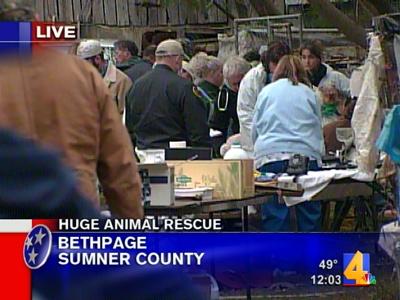
BETHPAGE, Tenn. -- Sumner County Sheriff's Deputies were at the scene Friday of a large animal rescue in middle Tennessee.
Slideshow: Authorities, Volunteers Rescue 400 Dogs From Home

Workers from 12 different agencies were in the Bethpage community where they were rounding up as many as 400 dogs from a local breeder.


Officials said the breeder of the dogs let the number of dogs she kept get out of hand.

The dogs belong to Irene Muser. Authorities said she has been cited because she let her breeding business get out of hand.

“There’s just so many animals. They are in such a precarious position that really the best thing for them is to be removed from the property and really taken care of somewhere else while they figure out what they want to do criminally,” said Laura Bevan of the U.S. Humane Society.

Workers from 12 agencies suited up for what they were calling “Operation Animal Hope.”


“Because of the close conditions of the animals and the time that they have been there, the sanitation issues and the aromas are pretty pungent,” Bevan said.

Workers said they found four to five dogs per cage and many were sick with diseases, and some were already dead.

Peggy Olea went to the kennel disguised as someone looking for a dog and alerted authorities to the situation.

She said she has been telling authorities about the conditions for years.

“She brought out a little puppy, I think it is dead now. It was a poodle puppy. We only touched it for a second and our hands were covered in animal lice. We had to shower when we got home,” Olea said.

“Our clothes smelled just from standing in the driveway. There were rows of cages. There were dogs piled on top of cages. When they urinate and defecate it goes between the cages and hits the other animals. We saw a few animals covered in feces and urine,” she said.


Olea and others expressed concern about the hundreds of other animals that Muser has sold from her diseased kennel.


Investigators said they would look into that as well.

“She generally sells within the community and probably within southern Kentucky and all over Tennessee. People have come to the house to buy animals so they are probably somewhat in the radius,” Bevan said.

“How could you come to this property and look at this and go, ‘This is OK’?” Olea said.

Most of the dogs were small breeds -- Pomeranians, Dachshunds and Shih Tzus and other types of small dogs.

The animals were to be loaded up and taken to a warehouse in Gallatin where veterinarians can examine them, officials said.

The healthy dogs will be separated from the sick dogs while at the warehouse.


Authorities said that all of the dogs are not sick and not all of them had parvo and that some would be adoptable.

They also said that a lot of the dogs would not survive.

To Make Donations Or To Volunteer In The Care Of The Dogs


The Hendersonville Animal Shelter said they would play a big role in the care of the animals and they said if people would like to donate they could do so at the following address:


Operation Animal Hope
P.O. Box 962
Hendersonville, TN 37077


Phone: 615-822-0061


Reference:wsmv

Saturday, October 21, 2006

Emus Offer Clues to How Dinos Walked


Larry O'Hanlon, Discovery News
Dino Model?
AP Photo/Lance Moler

Irma Quintero pets some of the emus that she raises on her farm outside Lubbock, Texas. Scientists recently watched emus walk to understand how dinosaurs walked thousands of years ago.

The mysterious moves of two-footed Jurassic dinosaurs traveling along a long-lost beach have been brought to life with emus.

Unlike computer models that have been developed to simulate the gait, and therefore the possible trackways of specific dinosaurs, live emus allow for direct comparisons of complex tracks to specific behaviors, say researchers looking at the thousands of tracks left behind 165 million years ago by dinosaurs at Red Gulch in northern Wyoming.

Among the surprises they’ve found is that tracks once interpreted as steady walking may actually be created by the animals stopping at mid-stride.

Another enigmatic type of trackway that now makes sense is where the dinos appear to have crossed one leg over the other. The motion is a seemingly weird thing to do, until you watch an emu making the same sort of track, explains Brent Breithaupt, director and curator of the University of Wyoming’s Geological Museum.


Emus, it turns out, have legs that are close together — like many dinos — and tend to look around a lot as they walk, Breithaupt explains. This scanning behavior causes emus to often cross the left foot over the right leg and the right foot over the left, making the same confusing pattern seen in the dinosaur trackways.


"Sure enough there are wonderful comparisons," said Breithaupt. "Emus are our biological Rosetta Stone."

He presents the latest on emus as proxies for dinosaurs on Oct. 25 at the annual meeting of the Geological Society of America in Philadelphia.


The search for a modern animal to act as a proxy for dino tracks started, says Breithaupt, because he was getting a little impatient with all the speculation about the trackways. There was too much of what he calls "prehistoric hyperbole."

So after passing on ostriches, which have only two toes, or rheas, which have three-toes but overly rambunctious personalities, emus remained as the best alternative. Plus there was an emu ranch just across the state line in Colorado.


Breithaupt and his team now think that the Red Gulch dinosaurs were probably man-sized meat-eaters, or theropods, which were traveling along in groups. The groups may have included families, since there are juvenile and adults tracks together, implying some sort of parental care.

Exactly what the dinosaurs looked like, however, is a mystery because the mid-Jurassic Period is particularly poor in dinosaur fossils in North America.


"There is virtually nothing known about dinosaurs in North America from that time," said geologist Erik Kvale, who discovered the tracksite and did a great deal of the first geological work there. "Chances are there were some very gregarious behaviors of dinosaurs (at Red Gulch), but it's only a snapshot."


What can be said with more certainty is that the dinosaurs were walking in a very different landscape than today, says Kvale. The sands beneath their feet were carbonate sands like those found in the Bahamas or the Florida Keyes, but the climate of the ancient shoreline was probably a lot drier.


"The Persian Gulf is a better analogue," said Kvale.

BLM Wyoming

Ancient Print
The angular shapes in this image are salt crystals formed when the beach dried after the dinosaur tracks were made. These crystals give scientists information about the air temperature and relative humidity which help with the environmental reconstruction.


Reference:Discovery

$72 Sponsorship to Save a Small Girl!


This 30 -35 pound, 1 1/2 year old chow mix baby was dumped at the pound by her family when they moved. She has no idea why she was abandoned, nor does she know that she could die next week if no one helps her! She is located in the Mercer County Pound in Celina, Ohio. There is a sponsor for her $22 pull fee, and an additional $50 sponsor for a reputable rescue to help cover expenses.


Western Union

Please contact the dog warden at 419-942-1550 to save her!

See all the dogs in need of help here:
Mercer County Pound

Reference:PetVersatility-DurbyPawsCrosspostingGroup

Crops at Risk as Birds and Bees Decline


Randolph E. Schmid, Associated Press

This is a story about the birds and the bees and reproduction. No, not that story. It's about plants. Most plants need to be pollinated by birds, bees, bats and other animals and insects to reproduce. And scientists say a decline in pollinators may spell trouble for crops.
Honeybees and bumblebees have been infected by the introduction of a parasite, while destruction of cave roosts has led to a decline in the bat population, according to a report released Wednesday by the National Research Council.
Other pollinator declines may also be associated with habitat loss but more research is needed to make sure, according to the council, an arm of the National Academy of Sciences.

More detailed research has been done in Europe, where declines and even extinctions of pollinators have been documented.
The report pointed out that in order to bear fruit, three-quarters of all flowering plants — including most food crops and some that provide fiber, drugs, and fuel — rely on pollinators for fertilization.
Farmers often lease colonies of bees to ensure pollination.
Yet honeybees, which pollinate more than 90 commercially grown crops, are one of the most affected pollinators. Indeed, honeybees had to be imported from outside North America last year for the first time since 1922, the report said.

The report urged the Agriculture Department to increase research into pest management and bee breeding practices.

In addition, long-term studies must be done on the populations of wild bee species and some butterflies, bats and hummingbirds, it said.

The United States should collaborate with Canada and Mexico to form a network of long-term monitoring projects, the council recommended.

Landowners, meanwhile, can take simple steps to make habitats more "pollinator friendly," for instance by growing native plants, the report suggested.

The research was funded by the Department of Agriculture, U.S. Geological Survey, National Academies and the Research Council's Division on Earth and Life Studies.

The study was requested by The North American Pollinator Protection Campaign, representing agencies and organizations in the United States, Canada and Mexico.

Animal Den - Gift Shop for Bird Lovers!


Reference:Discovery